Rebranding Strategy: When Your Business Outgrows Your Brand
Your product has improved. Your customers have changed. Your company is having conversations it couldn’t have had two years ago. But your website still tells the old story.
The sales deck looks different from the homepage. Your team explains the business three different ways. The identity that helped you launch no longer reflects the company you’re building.
A rebranding strategy starts by identifying that gap: what your business has become, what people currently understand about it, and what needs to change.
For founders, CMOs, and growing companies, that work can bring direction to decisions that have been happening one campaign, one presentation, and one design request at a time.
When should a company rebrand?
A useful reason to rebrand is a meaningful change in the business.
You may be moving into a new market, serving a different customer, introducing a broader product offering, or bringing several disconnected brands together. You may also have a strong business whose identity and messaging have never received the attention they need
Prospects misunderstand what you do after visiting your website.
Your messaging still describes an earlier version of the product.
Marketing, sales, and leadership use different explanations of your value.
Your visual identity feels out of place beside the companies you now compete with.
Your team repeatedly rebuilds basic materials because there is no usable brand system.
For a startup founder, the trigger might be a clearer understanding of the customer after the first few years of building.

“The Creative Direction
The aesthetic was intentionally warm and social”
For a CMO, it might be the difficulty of running a consistent campaign across a website, sales materials, paid creative, and product communications. For an established business, it might be a shift in expectations that the current identity hasn’t kept up with.
Each situation calls for a different scope. Start with the business problem before deciding what to redesign.
Brand refresh vs. rebrand: how much needs to change?
some of our concepts was adding the family and friends aspect as applying the makeup. Adding to the concept of friends and family s a social piece.
brand refresh updates how an existing brand presents itself while preserving its central positioning and recognizable assets. That might include refining the logo, improving typography, simplifying the color palette, updating photography, or creating more consistent templates.
A rebrand revisits deeper decisions about how the company should be understood. It can include positioning, messaging, visual identity, and sometimes naming.
If customers understand your value but your materials feel dated or inconsistent, a refresh may be enough.
If you are reaching a different audience or your current story no longer describes the business accurately, the work may need to begin with positioning. There is also value in knowing what to keep. A recognizable logo detail, a useful phrase, or an established color can give the updated identity continuity. The goal is to make deliberate changes with a clear reason behind them.
Before commissioning a new identity, define the decisions the project needs to resolve.
“A great find deserves its next chapter.”
A clear audience and position
Who needs to understand your business? What matters to them when they choose? Which alternatives are they comparing you with? For a startup, the customer who first adopted the product may differ from the buyer the company now needs to reach. For a growing business, a broader offer may require a clearer explanation of how its services fit together.
Those choices should shape the creative direction.

Messaging your team can use
Your messaging should give people a straightforward account of what you do, who it helps, and why it matters. It should also work at different lengths: a homepage headline, a short introduction, a sales conversation, and a more detailed product explanation. A useful messaging system gives the team shared language while leaving room to adapt it to the situation.
A distinctive visual identity
Brand identity design includes the logo, typography, colors, imagery, and the relationships between those elements. Evaluate the identity in actual applications. Put it on a website header, a presentation cover, a mobile screen, and a campaign graphic. A beautiful logo needs a surrounding system that helps the team produce consistent work.
A practical rollout
Decide which materials need to change first, who approves them, and who owns the system after launch.
For a CMO, this is where the project becomes operational. For a founder, it helps prevent a finished identity from sitting unused while the team works out how to apply it.
How Brand Havan brought the Velista identity together
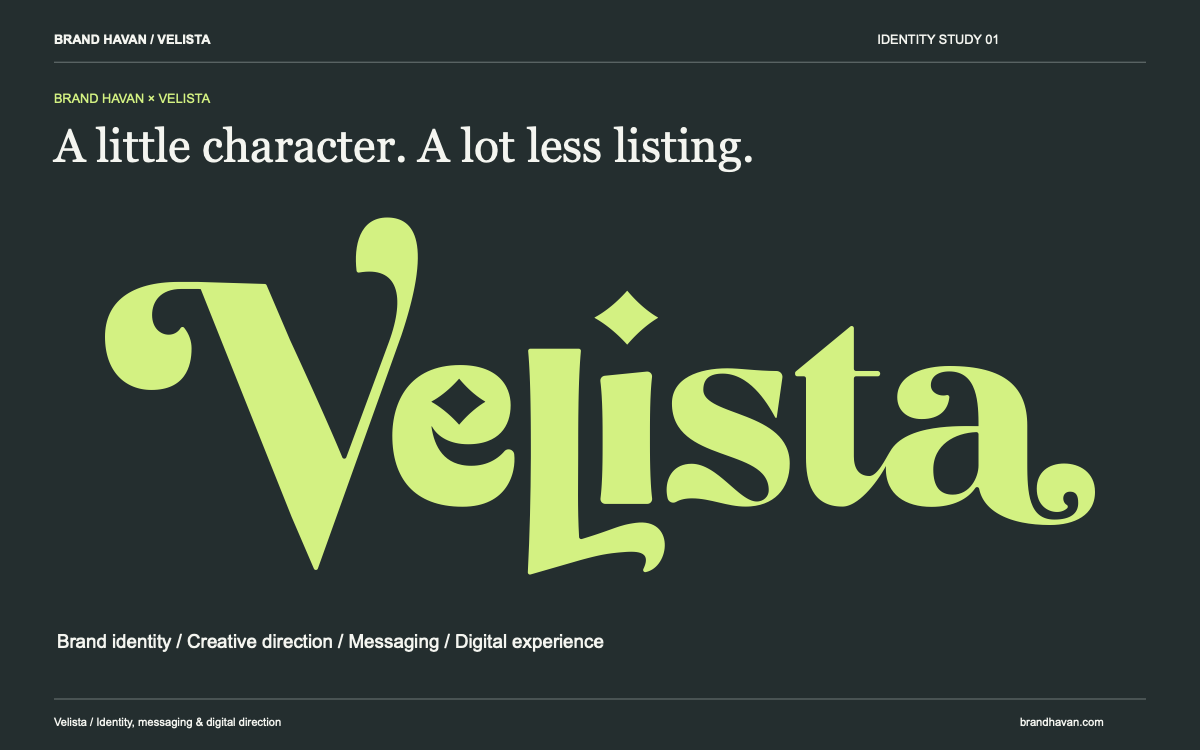
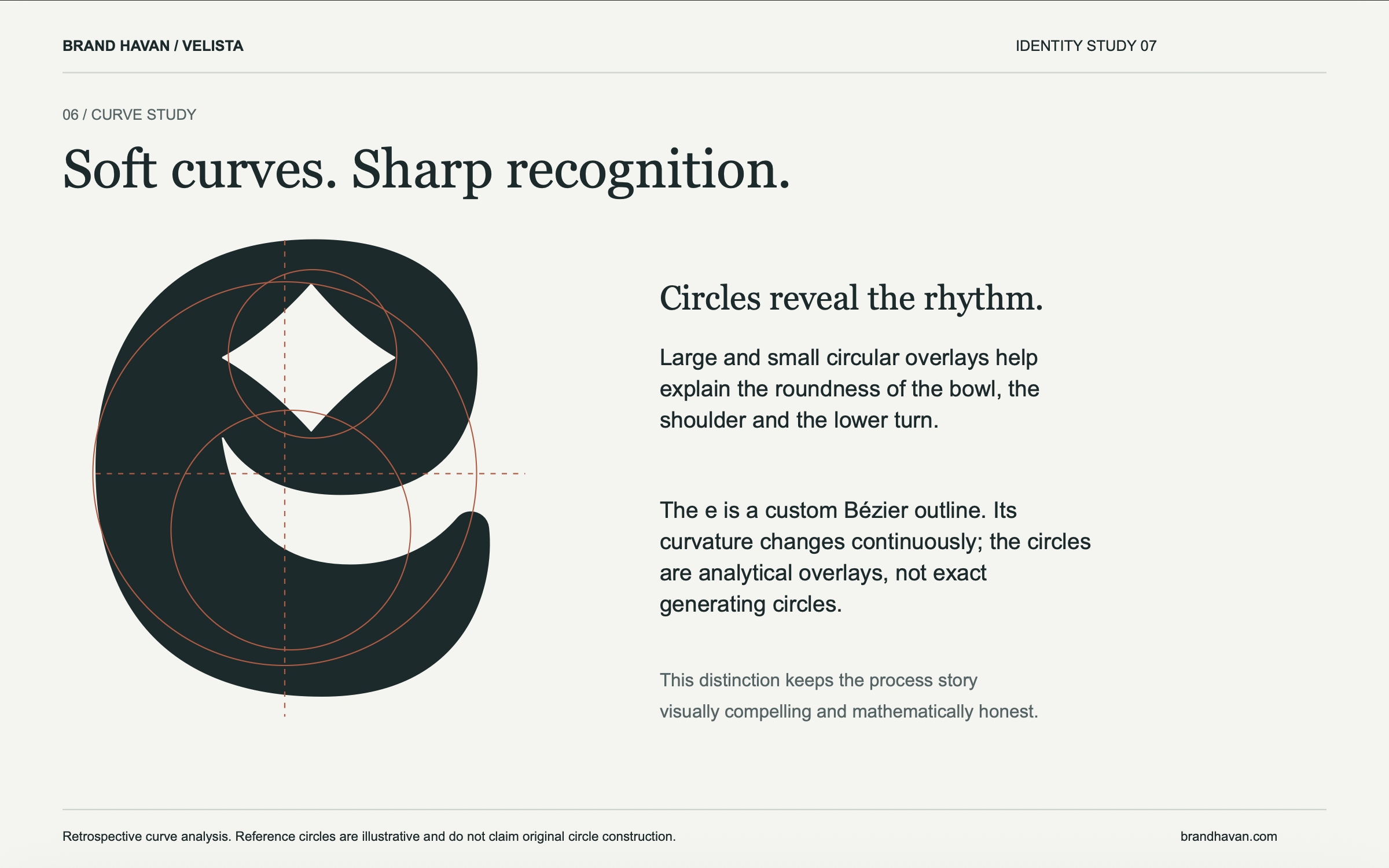
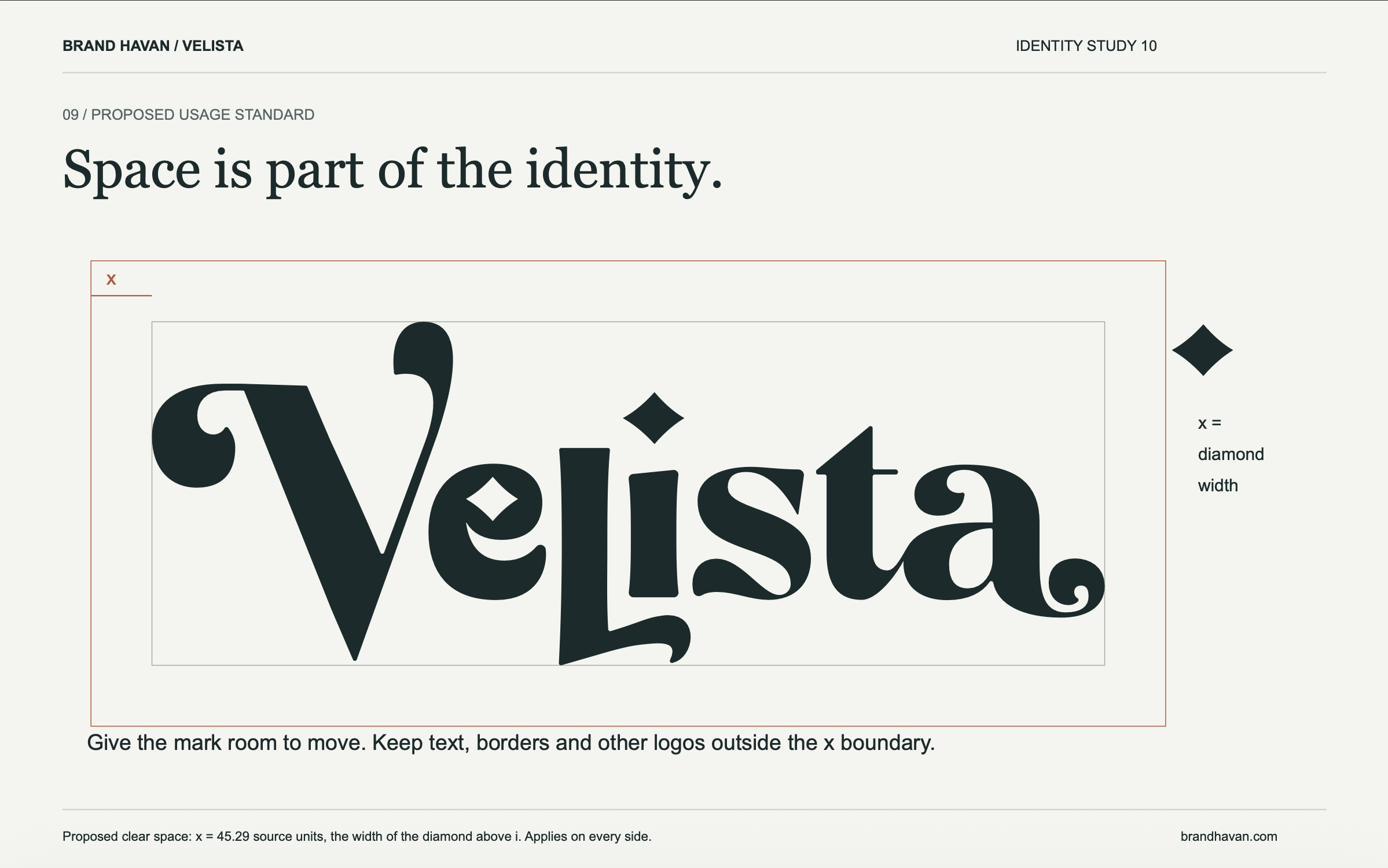
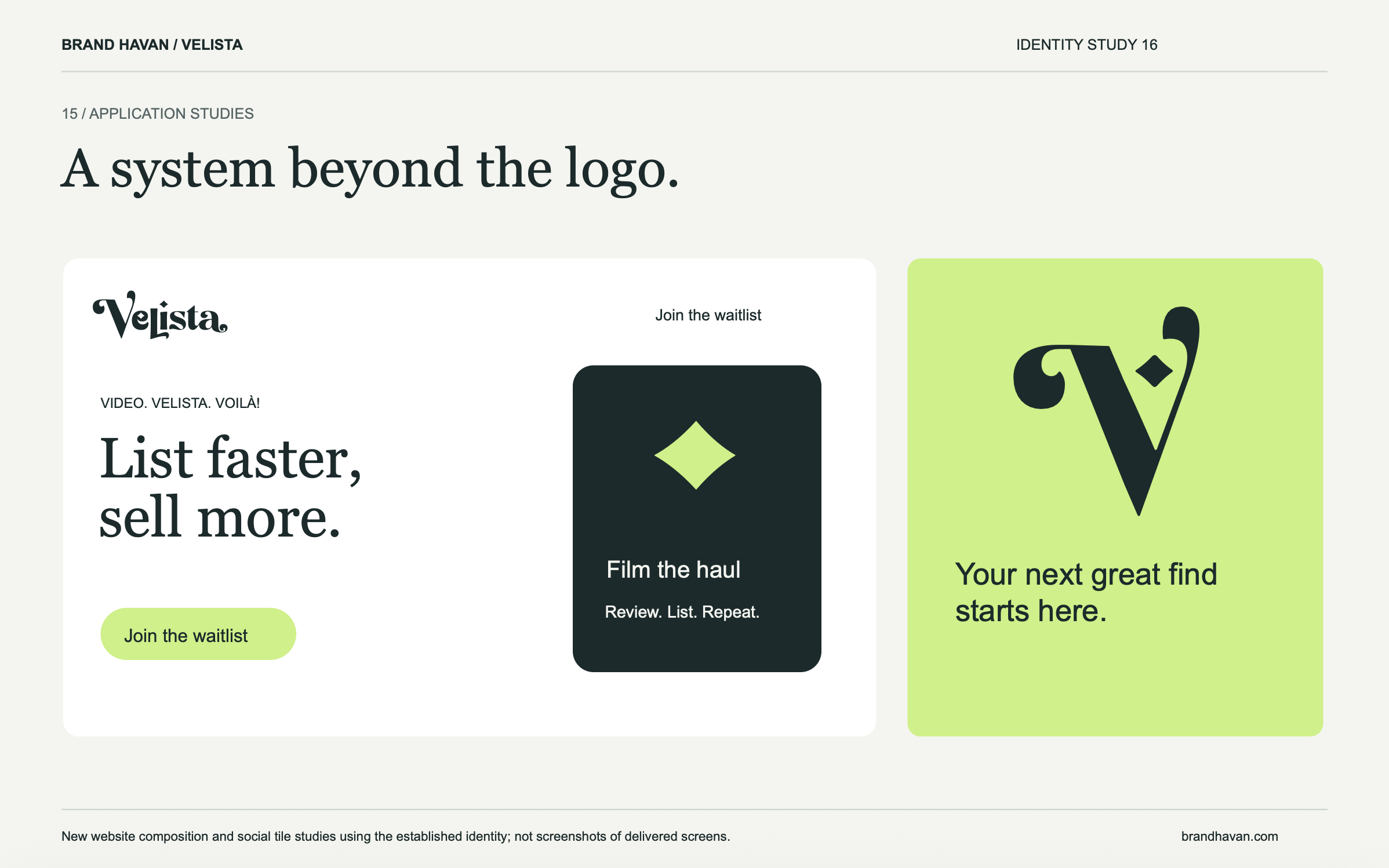
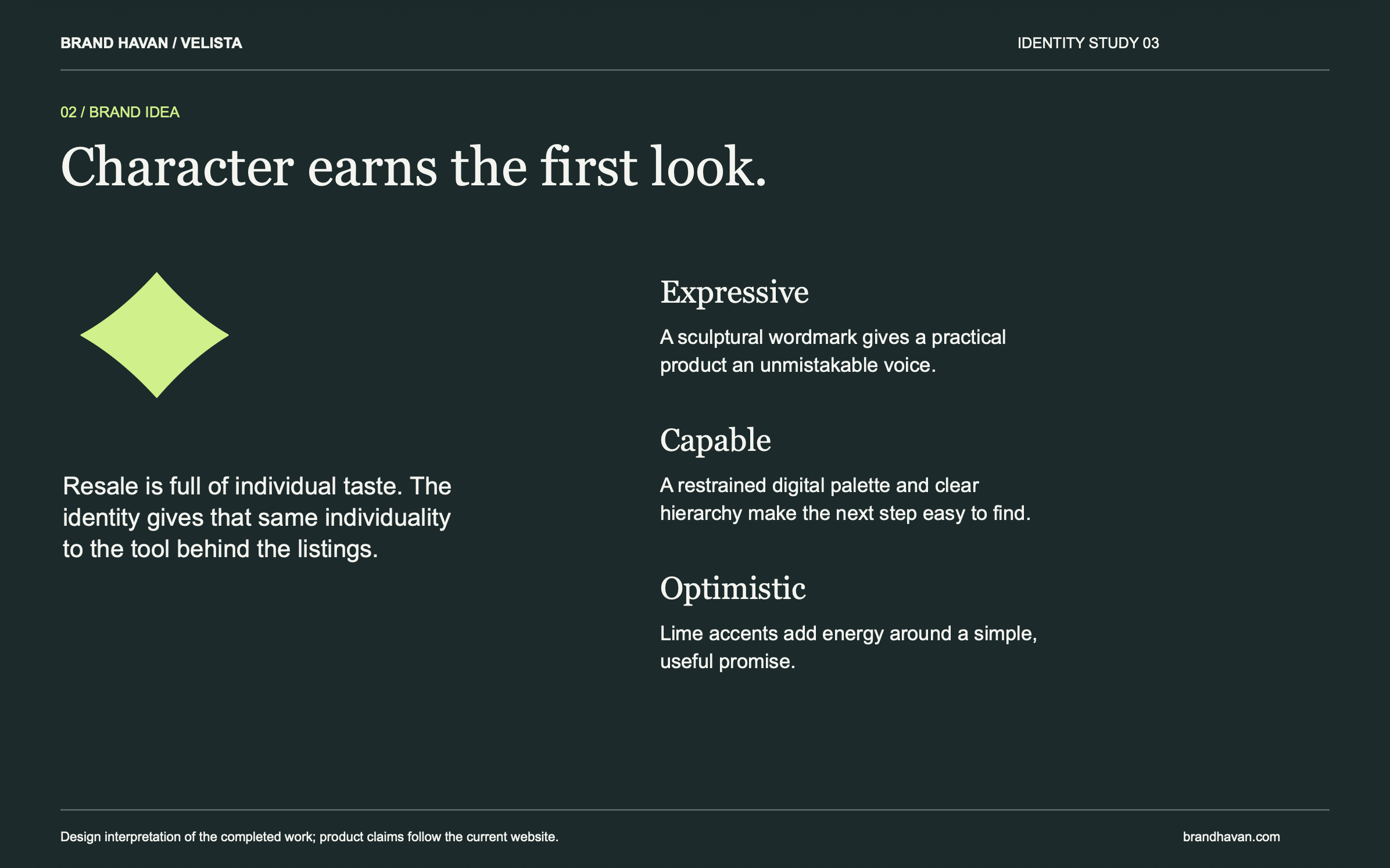
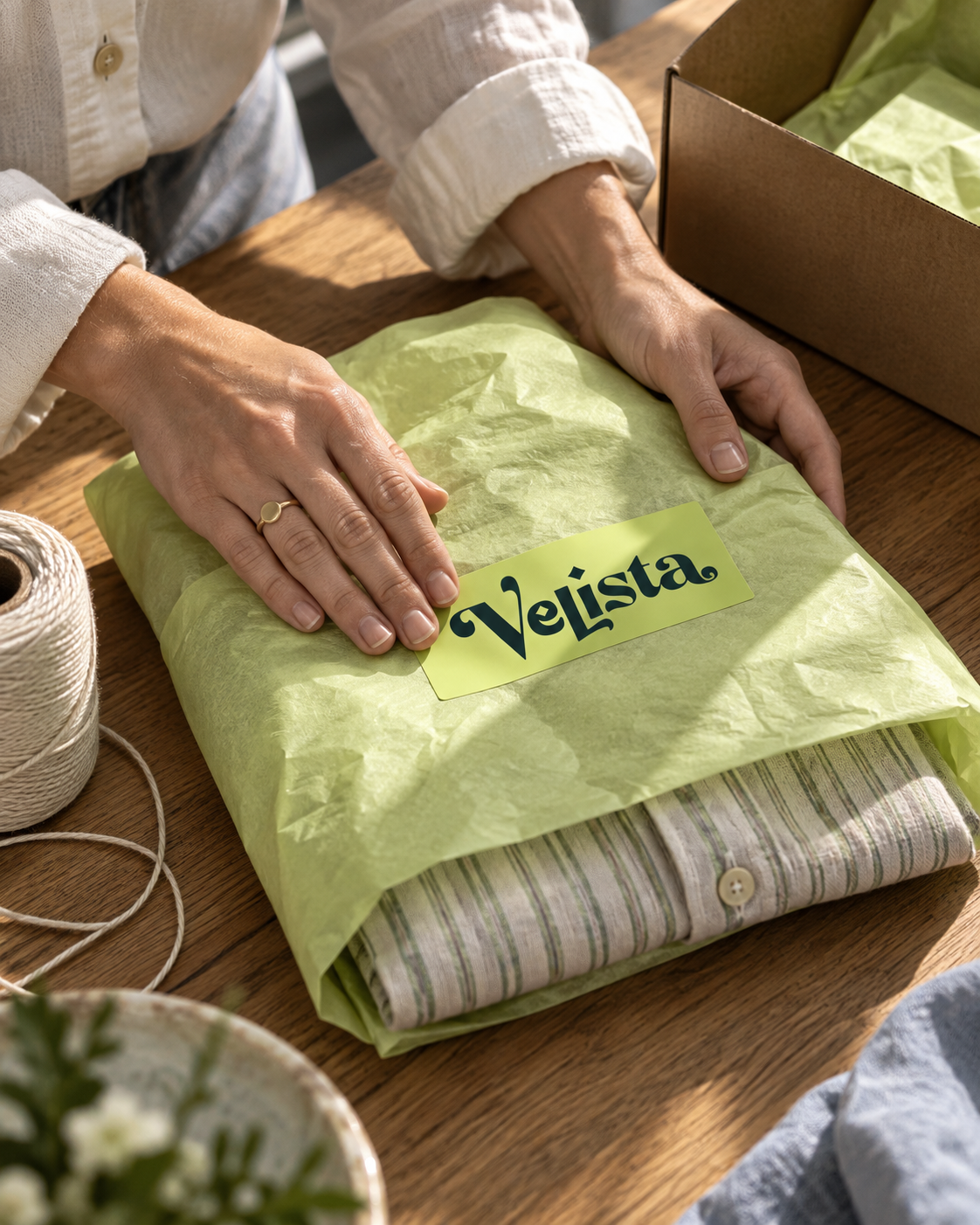
Velista provides a useful example of a connected brand system. Its website introduces a workflow designed to help resellers turn a haul video into listings. Brand Havan created the logo, messaging, color scheme, and overall creative direction. The wordmark gives the brand a distinctive personality. Its sweeping V, curled terminals, and recurring diamond detail create recognizable features across the full name and compact icon.
The language brings that personality into the product story: “Video. Velista. Voilà!”
The line connects an action, the brand name, and the idea of a result. It gives the product a short verbal signature people can repeat. The wider identity connects that expressive lettering with clear digital layouts and a distinctive green palette. The visual and verbal decisions reinforce the same introduction to the business. For a founder or marketing leader reviewing a rebrand, this is a useful way to assess the work: look at how the identity, message, and customer experience fit together. Explore the current brand at Velista.
How to choose a rebranding agency or creative studio
Ask potential partners to explain the decisions behind their work. A portfolio shows you the finished result. The conversation should help you understand how the studio connects that result to a business problem. Useful questions include:
How do you decide whether a company needs a refresh or a deeper rebrand?
How will you involve leadership and the people closest to customers?
How do positioning and messaging influence the visual direction?
Which real applications will you use to evaluate the identity?
What will our team receive and be able to use after the project?
Founders should look for clarity about scope and the decisions that require their involvement.
CMOs should look for a partner who understands adoption: how the brand will be used across teams, channels, and ongoing production. Before launch, agree on what you will review afterward. That might include customer understanding, consistency across materials, or how easily the team can produce new work. If you track commercial performance, establish a baseline and account for other changes happening alongside the rebrand.

“A brand should reflect the ambition of the people building it. With Velista, we brought that ambition into every detail, from the character of the logo to the way the product tells its story.”
Give your next stage a clear identity
Brand Strategy & Creative Direction
Jamice Ivie
Brand Havan
Client
Velista
velista.ai
Discipline
Brand Strategy & Positioning
Brand Identity & Logo Design
Messaging & Copywriting
Art Direction
Website Design
Featured Work
Wordmark & Icon System
Color Palette & Typography
Brand Voice & Messaging
Website & Digital Experience